Magnesia Partially Stabilized Zirconia (Mg-PSZ): Properties, Applications, and Precision Machining Case Study
Zirconia (ZrO₂) is one of the most important advanced engineering ceramics used in precision mechanical components.
Compared with many conventional ceramics, zirconia offers an unusual combination of hardness, wear resistance, mechanical strength, chemical stability, and relatively high fracture toughness. These properties make zirconia suitable for demanding components used in semiconductor equipment, automation systems, precision machinery, medical devices, optical equipment, and other high-performance industrial applications.
However, “zirconia” does not refer to only one material.
Different stabilizers, compositions, grain structures, sintering conditions, and heat treatments can produce zirconia ceramics with significantly different mechanical and thermal properties.
Two important zirconia systems used in engineering applications are:
- Y-TZP – Yttria-Stabilized Tetragonal Zirconia Polycrystal
- Mg-PSZ – Magnesia Partially Stabilized Zirconia
Y-TZP is widely used for high-strength precision ceramic components, while Mg-PSZ is particularly interesting for applications where fracture toughness, wear resistance, impact resistance, and mechanical reliability are important.
This article explains what Mg-PSZ is, how it differs from commonly used Y-TZP zirconia, where it can be applied, and what must be considered when machining Mg-PSZ into precision ceramic components.
What Is Magnesia Partially Stabilized Zirconia?
Pure zirconia undergoes several crystallographic phase transformations depending on temperature.
The primary zirconia phases are:
- Monoclinic
- Tetragonal
- Cubic
Without proper stabilization, the phase transformation that occurs during cooling can result in significant volume changes. These changes can generate internal stresses and potentially cause cracking in the ceramic.
To control this behavior, stabilizing oxides are added to zirconia.
For Mg-PSZ, magnesium oxide (MgO) is used as the stabilizing system.
The purpose is not simply to make zirconia chemically stable. The composition and microstructure are carefully controlled so that the ceramic can take advantage of one of zirconia’s most important mechanical mechanisms:
Transformation toughening.
Why Does Mg-PSZ Have High Fracture Toughness?
One of the major limitations of conventional ceramics is brittleness.
Ceramics can be extremely hard and highly resistant to compression and wear, but once a crack forms, it can propagate rapidly and cause sudden failure.
Zirconia behaves differently.
Under localized mechanical stress, particularly around the tip of a developing crack, metastable tetragonal zirconia can transform into the monoclinic phase.
This transformation is accompanied by localized volume expansion.
The resulting compressive stress around the crack tip can help resist further crack propagation.
In simplified terms:
When a crack begins to grow, zirconia can use a local phase transformation to help resist the crack from continuing through the material.
This phenomenon is known as transformation toughening.
It is one of the key reasons zirconia can achieve significantly higher fracture toughness than many traditional engineering ceramics.
Mg-PSZ is an important zirconia system designed to take advantage of this behavior.
Mg-PSZ vs. Conventional Zirconia: What Is the Difference?
In engineering drawings, ceramic materials are sometimes specified simply as:
“Zirconia” or “ZrO₂”
For simple applications, this may appear sufficient. However, for precision components or mechanically demanding applications, this definition can be incomplete.
Different zirconia systems can have different:
- flexural strength
- fracture toughness
- grain structure
- wear behavior
- thermal characteristics
- environmental stability
- long-term mechanical performance
For practical engineering purposes, Mg-PSZ is often more meaningfully compared with Y-TZP, one of the most widely used zirconia ceramics for precision components.
Mg-PSZ vs. Y-TZP Zirconia
| Property | Mg-PSZ | Y-TZP |
| Stabilizer | MgO | Y₂O₃ |
| Full Name | Magnesia Partially Stabilized Zirconia | Yttria-Stabilized Tetragonal Zirconia Polycrystal |
| General Material Structure | Partially stabilized zirconia | Predominantly tetragonal zirconia structure |
| Mechanical Strength | High | Typically very high |
| Fracture Toughness | Excellent | Excellent |
| Impact Resistance | Particularly attractive for demanding mechanical applications | Good to excellent |
| Wear Resistance | Excellent | Excellent |
| Thermal Shock Performance | Can be an important advantage depending on grade | Depends on material grade |
| Precision Component Applications | Suitable | Very widely used |
| Typical Selection Focus | Toughness, wear, impact, mechanical reliability | High strength, precision structures, wear resistance |
It is important to understand that Mg-PSZ is not simply an “upgraded” version of Y-TZP.
Likewise, Y-TZP should not be considered an inferior zirconia.
They are different material systems optimized for different engineering requirements.
Certain Y-TZP grades can provide exceptionally high flexural strength, making them particularly suitable for compact precision components and highly loaded structural parts.
Mg-PSZ, on the other hand, is especially worth considering when fracture toughness, wear, impact, or severe mechanical service conditions are important.
The better engineering question is therefore not:
“Which zirconia is better?”
Instead, it should be:
“Which zirconia is better suited to the actual operating conditions of this component?”
Key Engineering Properties of Mg-PSZ
The exact properties of Mg-PSZ vary depending on composition, ceramic manufacturer, raw material, grain structure, sintering process, and thermal treatment.
For this reason, material properties should always be confirmed against the datasheet of the specific grade selected for the project.
However, Mg-PSZ is generally recognized for several important engineering characteristics.
High Fracture Toughness
High fracture toughness is one of the most important reasons engineers consider Mg-PSZ.
In applications where ceramic parts are exposed to mechanical loading, repeated contact, or localized stress, resistance to crack propagation can be just as important as hardness.
This makes Mg-PSZ particularly interesting for mechanical ceramic components where brittle fracture is a major design concern.
Excellent Wear Resistance
Mg-PSZ combines high hardness with good mechanical toughness.
This makes it suitable for components exposed to sliding contact, friction, repeated mechanical contact, and abrasive environments.
Wear resistance can be particularly important in precision machinery where dimensional changes caused by long-term wear may affect alignment or equipment performance.
Good Impact Resistance
Mg-PSZ is still a ceramic and should not be treated like a ductile metal.
However, its relatively high toughness can make it more tolerant of certain mechanical shock conditions than many conventional engineering ceramics.
This makes it worth evaluating for components exposed to intermittent impact or concentrated mechanical loading.
Electrical Insulation
Zirconia is also an electrically insulating ceramic.
For certain equipment components, this allows zirconia to provide both mechanical performance and electrical isolation without using a metallic structure.
Chemical Stability
Zirconia provides good resistance to many corrosive industrial environments.
This can be beneficial when metallic components may suffer from corrosion, contamination, or undesirable interaction with the process environment.
Why We Do Not Use a Single Property Value for All Mg-PSZ
Mg-PSZ should not be treated as one universal material specification.
Different manufacturers may use different:
- MgO concentrations
- zirconia powder systems
- grain sizes
- sintering processes
- thermal treatments
- microstructure designs
As a result, properties such as flexural strength, fracture toughness, hardness, thermal expansion, thermal shock resistance, and maximum service temperature can vary between material grades.
For precision engineering applications, relying on a generic internet value for “Mg-PSZ” can therefore be misleading.
When performance is critical, we recommend defining the ceramic by its actual material grade, manufacturer specification, or minimum required properties.
This is especially important for replacement parts, semiconductor equipment, high-load components, and applications where material consistency between production batches is required.
Mg-PSZ vs. Alumina
Alumina (Al₂O₃) is one of the most widely used technical ceramics in industrial applications.
It provides:
- high hardness
- excellent electrical insulation
- good wear resistance
- good chemical resistance
- mature material availability
- relatively competitive cost
For many ceramic components, alumina is an excellent material.
The major difference is toughness.
When a component requires primarily electrical insulation, wear resistance, hardness, and cost efficiency, alumina may be the more practical choice.
However, when the design is exposed to higher mechanical loading, impact, or increased risk of crack propagation, Mg-PSZ or another zirconia system may deserve further evaluation.
This does not mean that zirconia is universally superior to alumina.
It means that they solve different engineering problems.
Mg-PSZ vs. Silicon Carbide
Silicon carbide (SiC) is another important advanced ceramic.
SiC provides exceptional hardness, excellent wear resistance, high-temperature capability, high stiffness, and significantly higher thermal conductivity than zirconia.
For semiconductor equipment, high-temperature components, structural systems, and thermally demanding applications, SiC can offer major advantages.
However, SiC is also an extremely hard and brittle material.
If the application prioritizes high stiffness, hardness, temperature capability, or heat transfer, SiC may be the better candidate.
If the design places greater emphasis on fracture toughness, resistance to crack propagation, and mechanical impact, Mg-PSZ offers a different set of advantages.
Once again, ceramic selection should not be based on hardness alone.
When Should Engineers Consider Mg-PSZ?
Mg-PSZ is particularly worth evaluating when a ceramic component operates under combinations of:
- mechanical loading
- repeated contact
- sliding wear
- abrasive conditions
- localized impact
- electrical insulation requirements
- corrosion concerns
- high reliability requirements
Potential applications can include:
- precision ceramic fixtures
- positioning components
- ceramic guides
- wear plates
- rollers
- valve components
- pump components
- precision equipment components
- mechanical wear components
- custom industrial ceramic parts
In semiconductor and automation equipment, zirconia may also be considered where wear resistance, electrical insulation, low metallic contamination, and mechanical reliability need to be achieved within the same component.
Why Is Precision Machining of Mg-PSZ Challenging?
Although Mg-PSZ has relatively high fracture toughness for a ceramic, fully sintered Mg-PSZ remains an extremely hard engineering material.
Its machining behavior is therefore fundamentally different from aluminum, stainless steel, titanium, or engineering plastics.
Fully sintered zirconia generally requires diamond tooling and precision ceramic grinding processes.
As component complexity increases, manufacturing becomes considerably more challenging.
Typical difficult features may include:
- precision holes
- small holes
- deep holes
- narrow slots
- thin walls
- tight dimensional tolerances
- flatness requirements
- parallelism requirements
- complex profiles
- demanding surface finish specifications
The manufacturing challenge is not simply removing material.
The process must remove material while maintaining the structural integrity of the ceramic.
Precision Ceramic Machining Is About More Than Dimensional Accuracy
For Mg-PSZ and other advanced ceramics, dimensional inspection alone does not tell the entire story.
Machining must also control:
- edge chipping
- local microcracking
- hole-edge integrity
- machining-induced stress
- thin-wall damage
- internal stress concentration
- surface integrity
- dimensional stability
A ceramic component may appear dimensionally correct while still containing localized damage introduced during machining.
Such damage can become a failure initiation point during assembly or long-term service.
This is why precision ceramic manufacturing must consider not only:
“Can the dimension be achieved?”
but also:
“Can the component maintain sufficient structural integrity after machining?”
Case Study: Precision Machining of a Customer-Specified Mg-PSZ Component
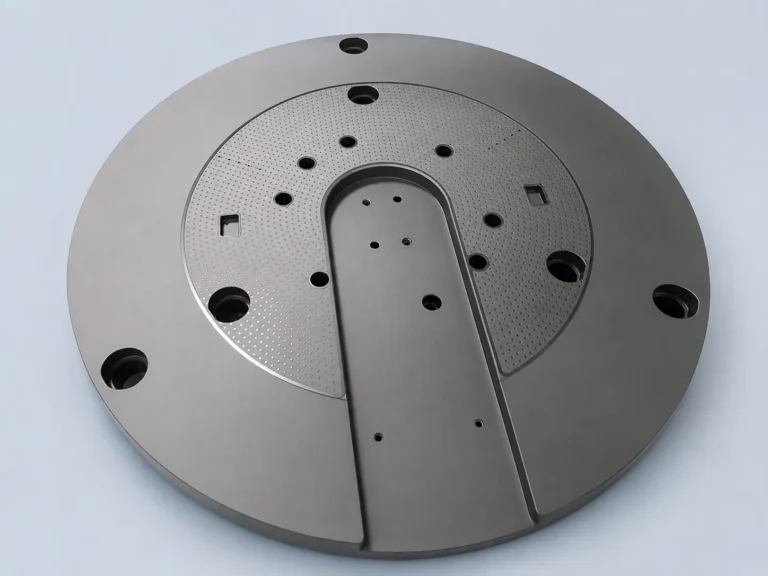
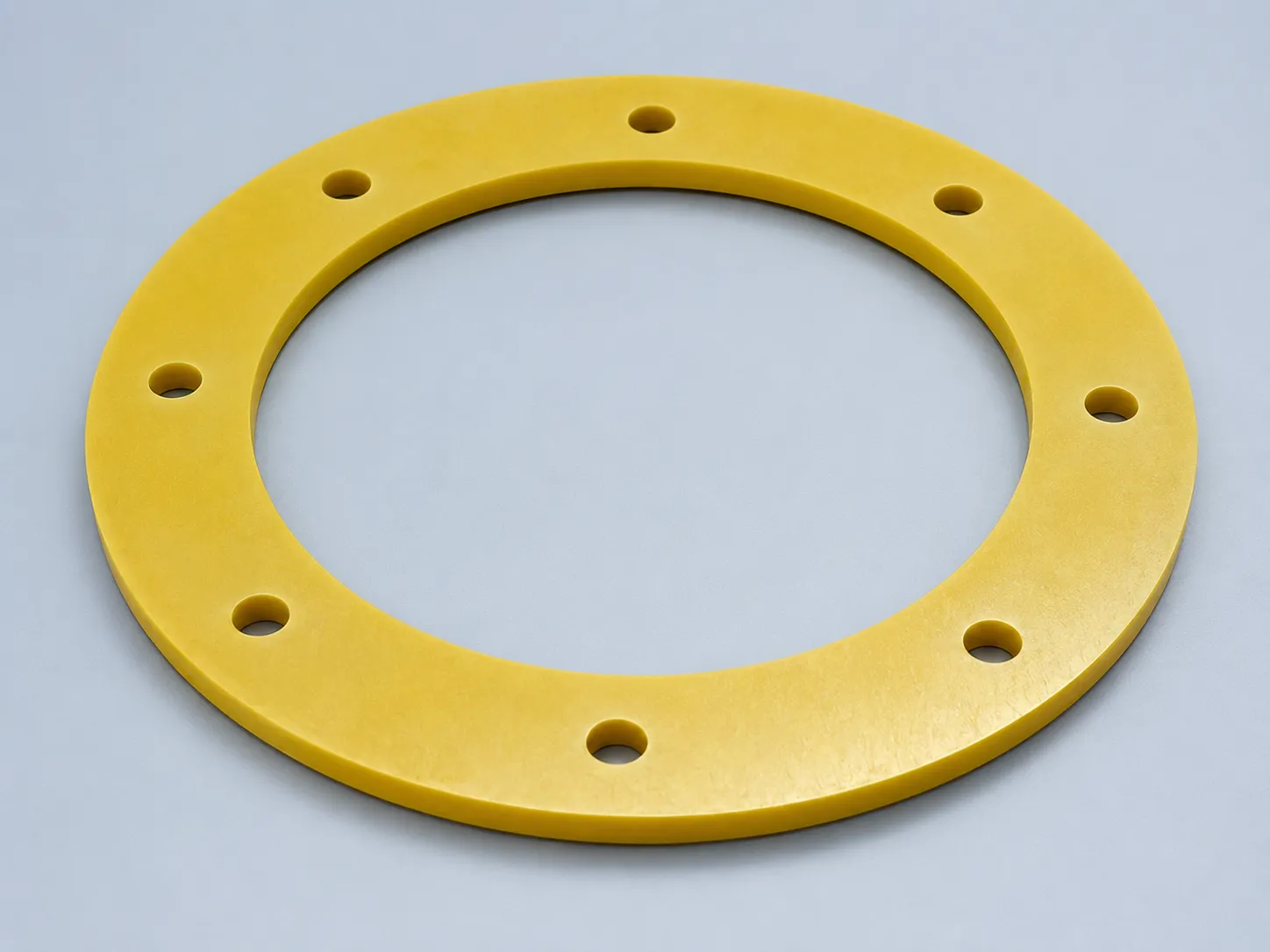
InstaVoxel has previously manufactured precision ceramic components where the customer specifically required Mg-PSZ as the material.
Unlike conventional metal machining projects, the manufacturing evaluation for this type of component begins with more than just reviewing the external dimensions.
The material condition, blank geometry, machining allowance, local wall thickness, hole locations, dimensional tolerances, flatness requirements, surface requirements, and intended operating conditions all need to be considered together.
For this project, the manufacturing process was planned around the characteristics of Mg-PSZ and the geometry of the component.
Special attention was given to how material would be removed during different machining stages.
This is important because machining a ceramic feature directly to its final dimension too early in the process can increase the risk of edge damage, localized stress, or dimensional instability during subsequent grinding operations.
The machining sequence therefore needs to be planned as part of the engineering process rather than simply following the drawing feature by feature.
This type of project demonstrates an important difference between conventional CNC machining and advanced ceramic machining:
The geometry may define the finished component, but the material determines how that geometry can be manufactured reliably.
Why Experience Matters in Mg-PSZ Machining
The same geometry can present completely different manufacturing challenges depending on the material.
For example, a component made from Aluminum 6061 may be relatively straightforward to CNC machine.
The same geometry in stainless steel may require different cutting parameters and tooling.
If the material is changed to Mg-PSZ, the manufacturing strategy changes much more significantly.
Engineers must reconsider:
- machining method
- diamond tooling
- material removal strategy
- workholding
- edge protection
- grinding sequence
- dimensional inspection
- surface integrity
This is why ceramic machining experience becomes particularly important when developing precision components from Mg-PSZ.
A design that appears simple geometrically may still be difficult to manufacture reliably once the material properties are taken into account.
Mg-PSZ or Y-TZP: Which Zirconia Should You Choose?
There is no universal answer.
If a component requires very high mechanical strength, compact geometry, precise dimensional control, and an established zirconia supply chain, Y-TZP may be an excellent choice.
If the application places greater emphasis on fracture toughness, wear resistance, mechanical impact, and resistance to crack propagation, Mg-PSZ may deserve closer consideration.
If the primary requirements are hardness, electrical insulation, wear resistance, and cost efficiency, alumina may be more suitable.
If high stiffness, thermal conductivity, extreme hardness, or high-temperature capability are critical, silicon carbide may be the better material.
Material selection should therefore consider the complete operating environment:
Temperature + Load + Impact + Wear + Chemical Environment + Electrical Requirements + Geometry + Tolerance + Surface Requirements + Cost
Selecting an advanced ceramic based on only one property rarely leads to the optimum design.
Custom Mg-PSZ and Precision Zirconia Ceramic Machining
Mg-PSZ combines high fracture toughness, wear resistance, mechanical reliability, electrical insulation, and good chemical stability, making it an important advanced ceramic for demanding precision equipment.
However, selecting the correct ceramic is only the first step.
Material grade, blank preparation, precision grinding, feature geometry, dimensional tolerances, flatness, surface requirements, and inspection strategy can all affect the final performance of the component.
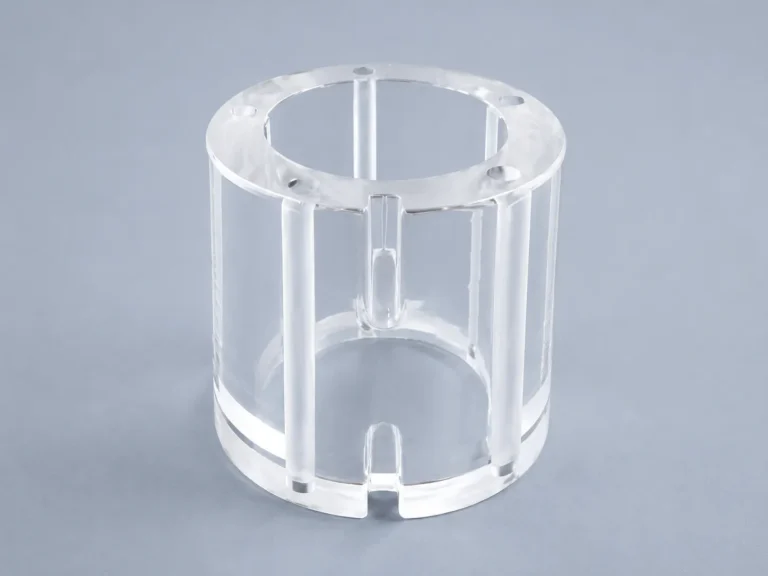
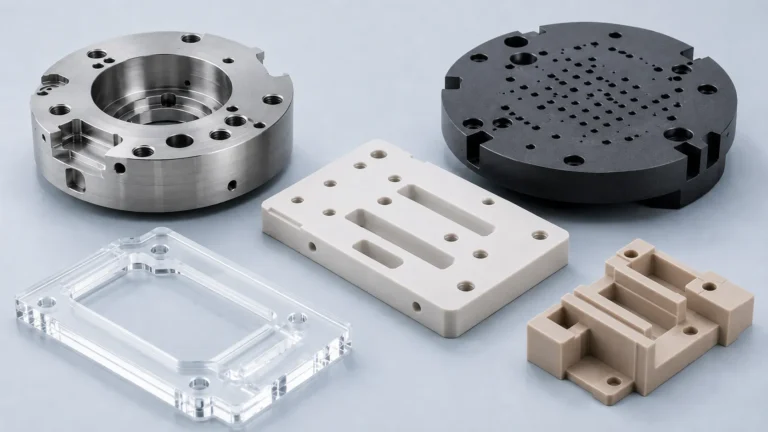
InstaVoxel has practical precision machining experience with a wide range of advanced ceramics and brittle materials, including:
- Zirconia
- Mg-PSZ
- Alumina
- Aluminum Nitride
- Silicon Carbide
- Silicon Nitride
- Macor
- Quartz
- Fused Silica
- Sapphire
For custom Mg-PSZ components, we can evaluate customer drawings not only from a dimensional perspective, but also from the standpoint of material behavior, machining feasibility, geometry, tolerances, and manufacturing risk.
For existing components experiencing wear, brittle failure, electrical insulation issues, metallic contamination, or insufficient service life, comparing Mg-PSZ with Y-TZP, alumina, silicon carbide, or other advanced ceramics can help identify a more suitable material solution.
Engineering Note
The images and examples presented in this article are intended to illustrate common engineering concepts and representative industry practices. To protect customer confidentiality, certain dimensions, geometries, specifications, and application details may have been modified while preserving the underlying engineering principles.