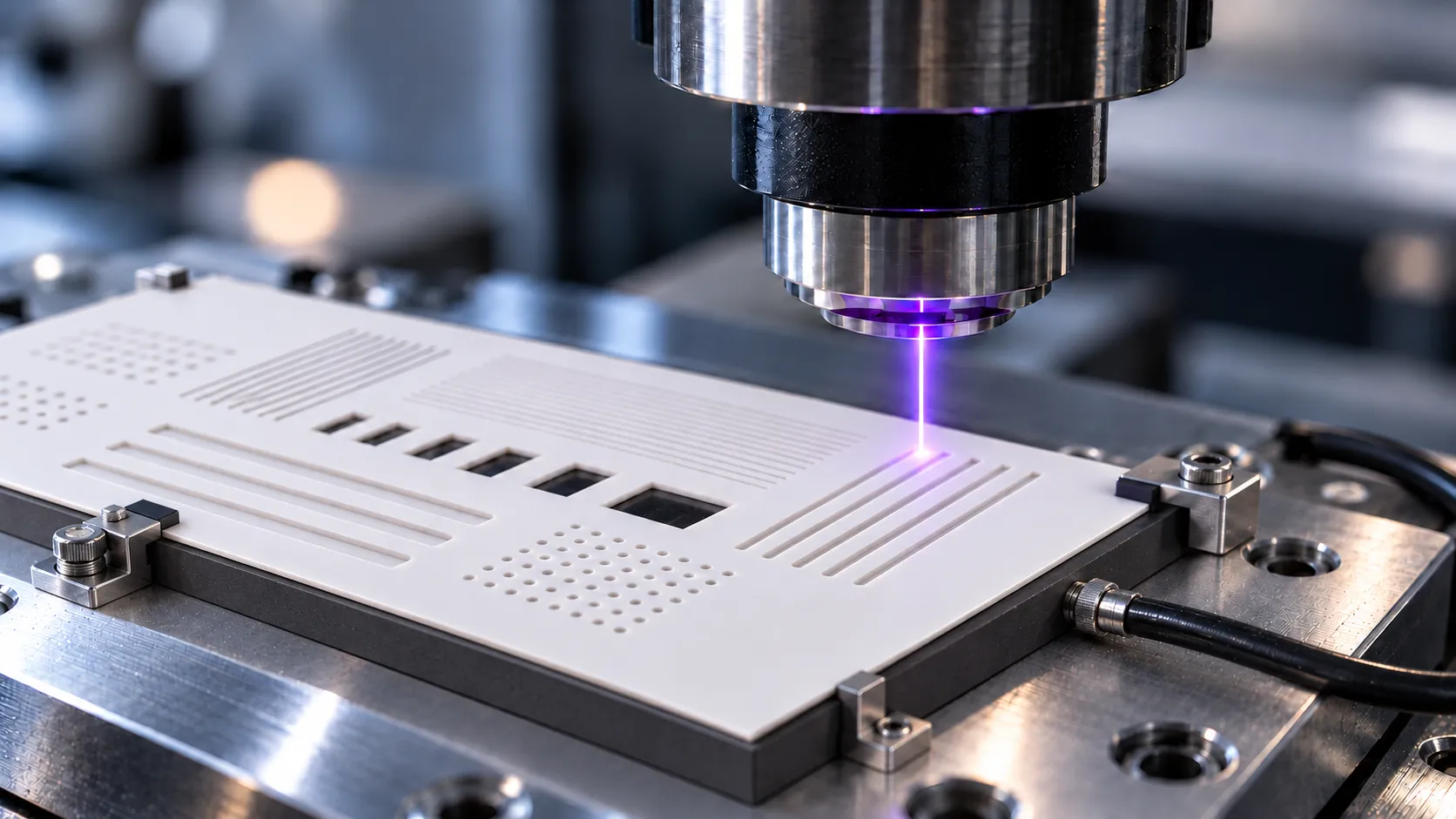
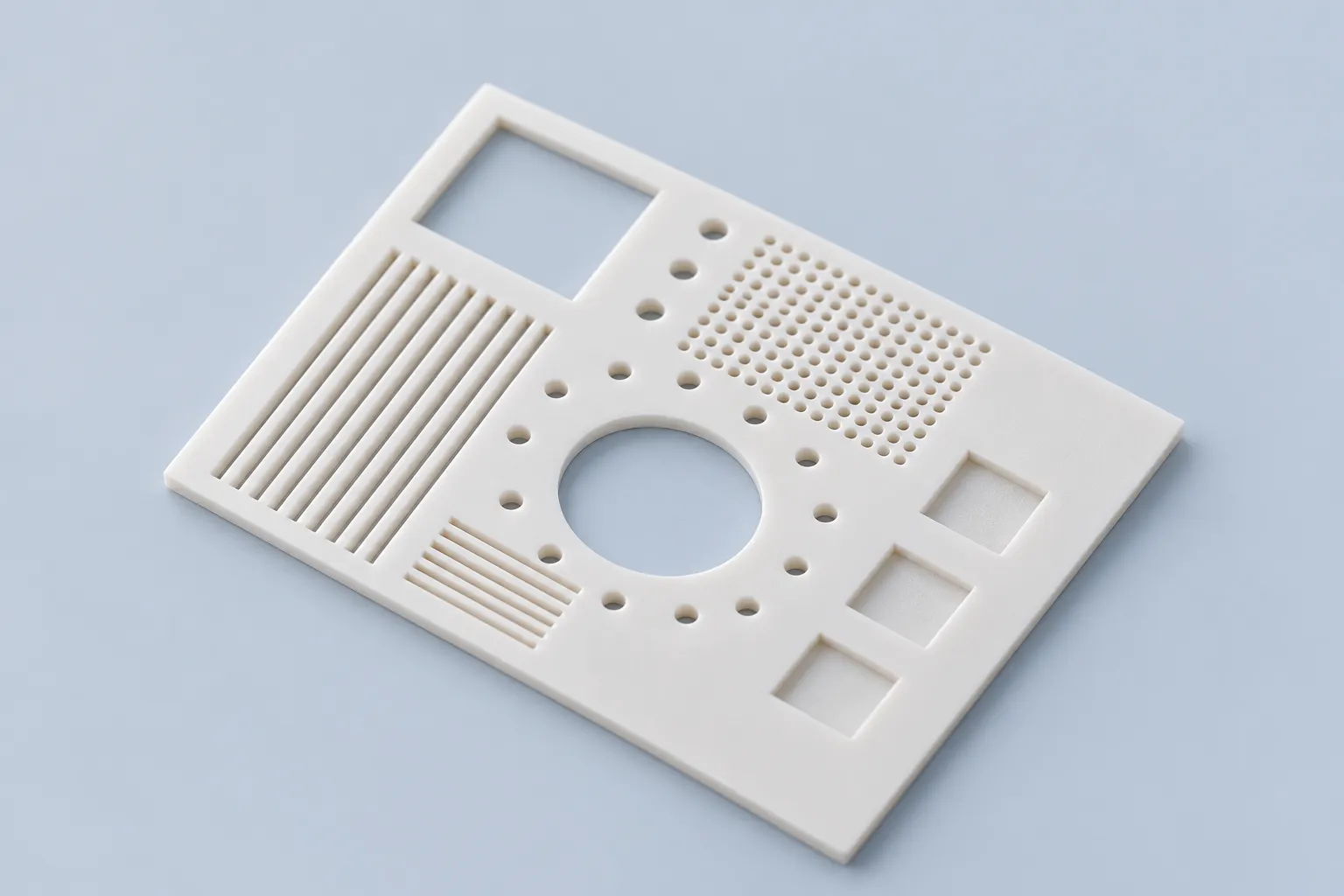
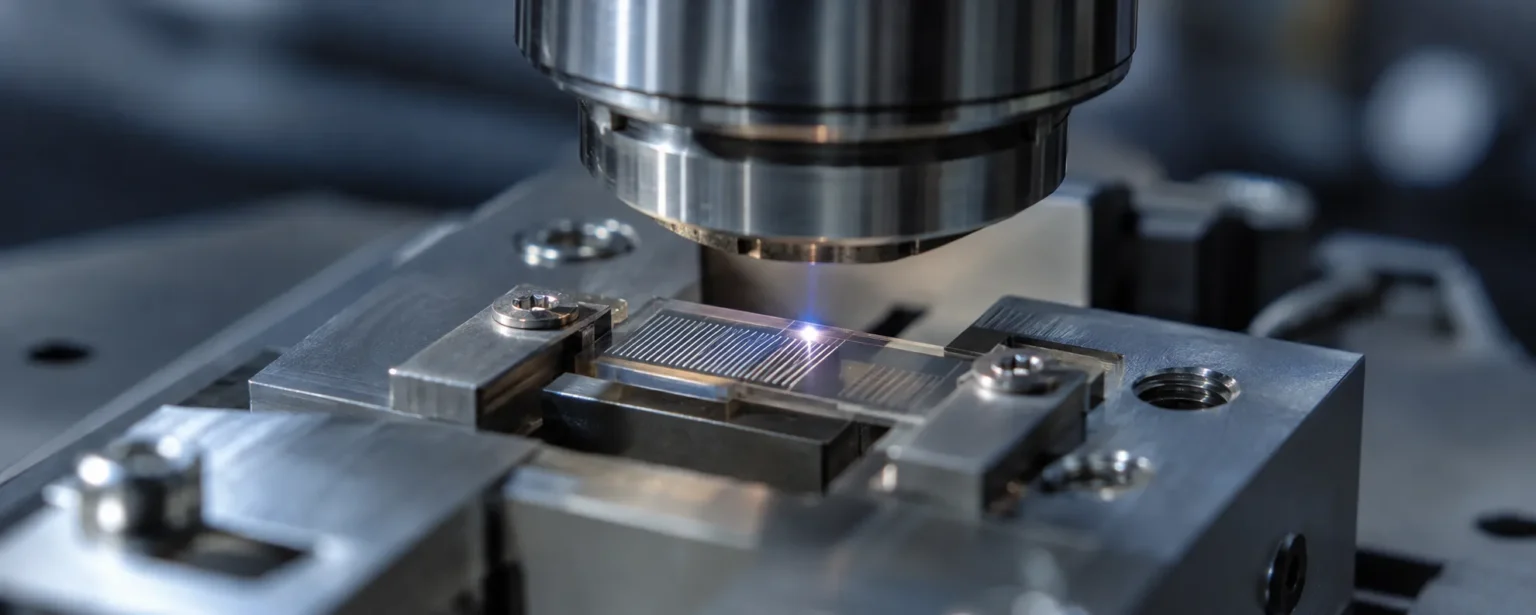
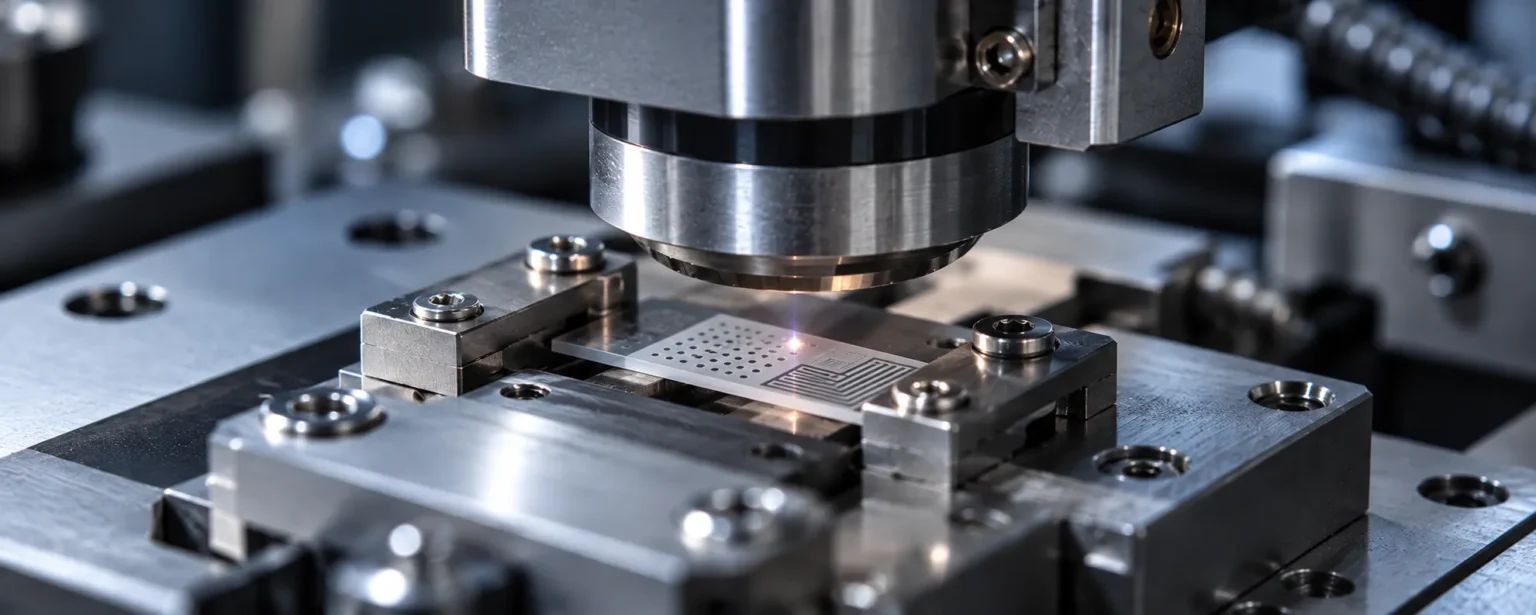
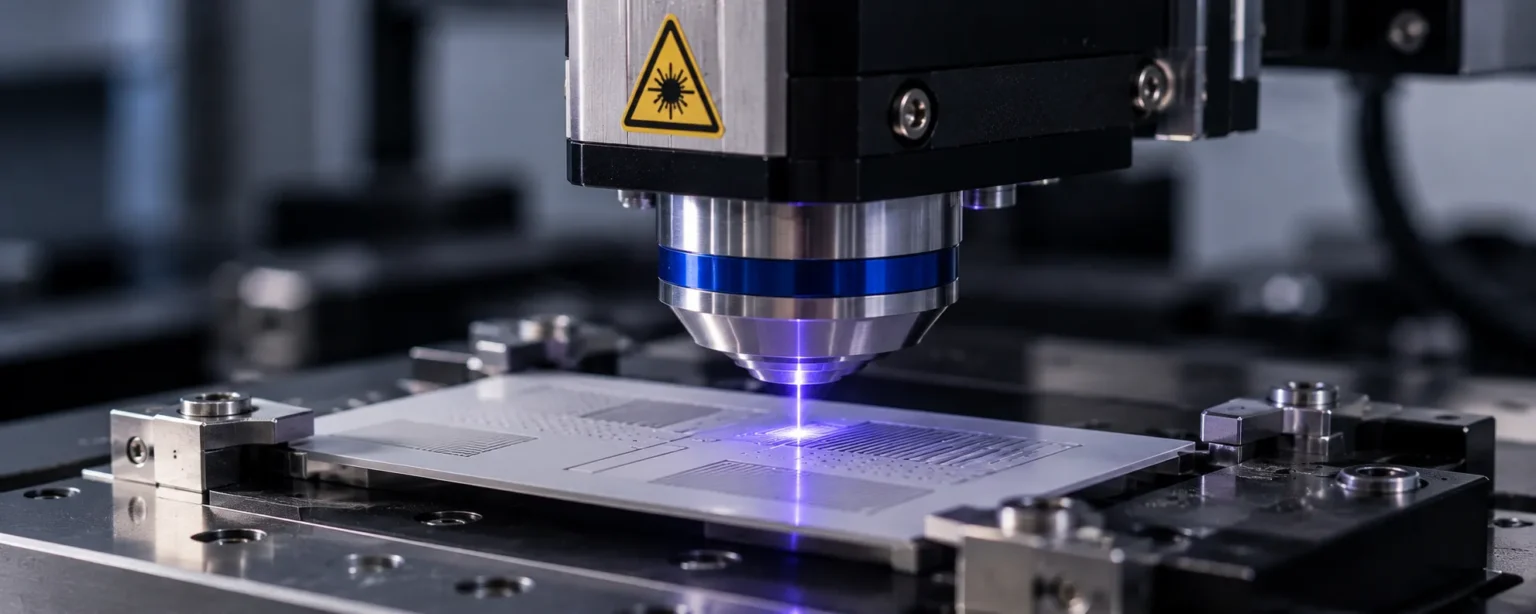
InstaVoxel provides precision laser micromachining services using femtosecond, picosecond, and UV nanosecond laser technologies. We specialize in processing advanced ceramics, semiconductor materials, optical glass, and other hard and brittle materials.
Our capabilities include precision micro-drilling, micro-cutting, grooving, and complex microstructures, enabling intricate geometries with reduced thermal damage and minimal mechanical stress.
Laser micromachining is a non-contact manufacturing process that uses focused laser energy to precisely remove material and produce microscopic features.
Unlike conventional CNC machining, laser processing eliminates mechanical cutting forces, making it suitable for thin substrates, hard ceramics, and fragile components.
By selecting appropriate laser technologies and processing parameters, we help customers achieve fine features, controlled machining depths, and reliable surface quality.
Enables intricate microstructures and ultra-fine features.
Superior Edge Quality
Reduces microcracking, chipping, and material damage.
Picosecond Laser Micromachining
High Precision
Produces fine features with controlled material removal.
Reduced Thermal Effects
Minimizes heat accumulation and localized damage.
Processing Efficiency
Balances machining accuracy, quality, and productivity.
UV Nanosecond Laser Micromachining
Fine-Feature Processing
Enables precise machining with focused UV laser energy.
High Processing Speed
Supports efficient drilling, cutting, and surface patterning.
Material Versatility
Processes various ceramics, electronic substrates, and polymers.
Laser Micromachining
FAQs
Laser processing may cause thermal damage or microcracking. Picosecond and femtosecond technologies can significantly reduce these risks through optimized processing parameters.
Laser micromachining can produce micrometer-scale features. Achievable tolerances depend on material properties, feature dimensions, machining depth, and process requirements.
Femtosecond lasers offer minimal thermal effects and excellent fine-feature capabilities. Picosecond lasers balance precision and efficiency, while UV nanosecond lasers provide versatile, cost-effective processing for many micro-machining applications.